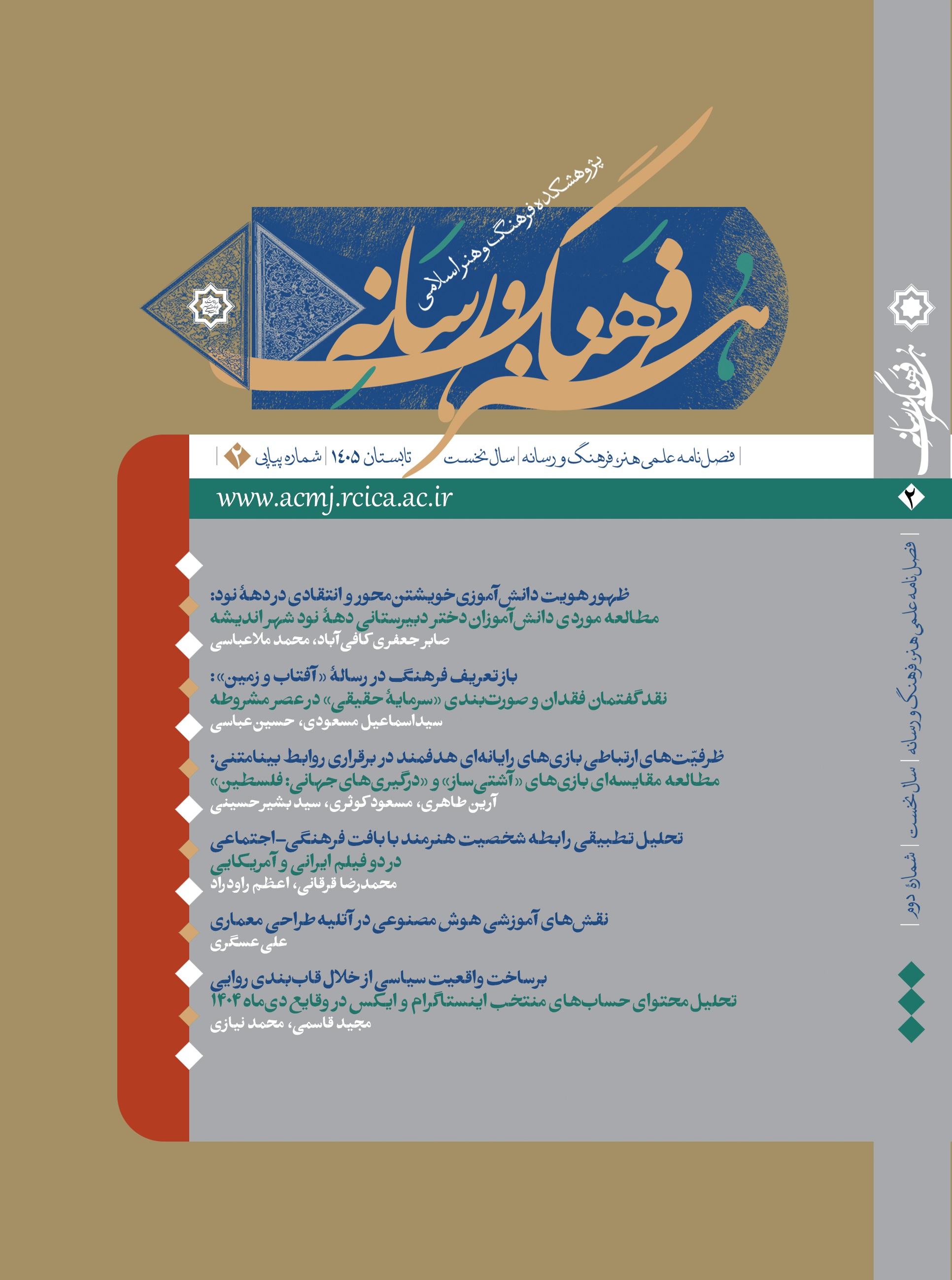
برساخت واقعیت سیاسی از خلال قاب‌بندی روایی: تحلیل محتوای حساب‌های منتخب اینستاگرام و ایکس در وقایع دی‌ماه ۱۴۰۴

نوع مقاله : مقاله پژوهشی

نویسندگان
1 دانشجوی دکتری جامعه شناسی سیاسی دانشگاه علامه طباطبایی (ره)
2 استادیار پژوهشکدۀ فرهنگ و هنر اسلامی
چکیده
این پژوهش چگونگی برساخت واقعیت سیاسی از خلال قاب‌بندی روایی در محتوای حساب‌های منتخب اینستاگرام و ایکس پیرامون وقایع دی‌ماه ۱۴۰۴ را بررسی می‌کند. چارچوب نظری پژوهش بر نظریۀ قاب‌بندی اسنو و بنفورد و جامعه‌شناسی عواطف جاسپر استوار است و روش پژوهش، تحلیل محتوای کیفی جهت‌دار است. نمونه به‌صورت هدفمند از ده حساب متعلق یا نزدیک به یک جریان سیاسی مشخص و فعال در تولید و گردش روایت‌های این وقایع انتخاب شده است. منطق انتخاب، نه نمایندگی طیف‌های مختلف اپوزیسیون، بلکه مطالعۀ الگوهای تفسیری این جریان با حفظ تنوع درون‌جریانی میان کنشگران سیاسی، چهره‌های رسانه‌ای، هنرمندان و چهره‌های فرهنگی، اینفلوئنسرها و رسانۀ حرفه‌ای بوده است. یافته‌ها بر اساس پانزده کد از پیش تعریف‌شده در پنج قاب اصلی سازمان یافتند: «قاب فروپاشی»، «قاب لحظۀ استثنایی»، «تغییر ادراک خطر و قدرت»، «قاب‌بندی خشونت» و «قاب آینده». در پیکرۀ مورد مطالعه، این قاب‌ها از طریق برجسته‌سازی فروپاشی و قطعیت پیروزی، فوریت و ضرورت کنش، ضعف طرف مقابل و امکان موفقیت، صورت‌بندی هنجاری خشونت و تصویرسازی از آیندۀ مطلوب، تعریف خاصی از وضعیت سیاسی عرضه می‌کنند. از آنجا که پژوهش دادۀ مستقلی از مخاطبان گردآوری نکرده است، یافته‌ها ناظر بر ساختار معنایی و الگوهای تفسیری موجود در پیام‌هاست و نه اثبات تغییر واقعی ادراک یا رفتار مخاطبان. نتیجۀ پژوهش نشان می‌دهد که پیوند این پنج قاب، در پیکرۀ منتخب، بسته‌ای تفسیری برای تعریف وضعیت، زمان، موازنۀ خطر و قدرت، خشونت و آیندۀ سیاسی شکل داده است.
کلیدواژه‌ها
موضوعات

عنوان مقاله English

Constructing Political Reality through Narrative Framing: A Content Analysis of Selected Instagram and X Accounts during the Events of December 2025–January 2026

نویسندگان English

Majid Ghasemi 1
Mohammad Niyazi 2
1 PhD Student in Political Sociology, Allameh Tabataba’i University
2 Assistant Professor at the Research Institute for Islamic Culture and Art
چکیده English

This study examines the construction of political realitythrough narrative framing in selected Instagram and X accounts concerning the events of Dey 1404 (December 2025–January 2026). Drawing on Snow and Benford’s framing theory and Jasper’s sociology of emotions, it employs directed qualitative content analysis. Ten accounts associated with a specific political current were purposively selected to examine its interpretive patterns while preserving diversity among political actors, media figures, artists, influencers, and a professional media outlet, rather than representing different opposition currents. The findings identify fifteen predefined codes organized into five frames: Collapse, Exceptional Moment, Changing Perceptions of Risk and Power, Framing of Violence, and Future. Together, these frames construct a particular interpretation of the political situation by emphasizing imminent collapse, the certainty of victory, the urgency of action, the perceived weakness of the opposing side, the possibility of success, normative representations of violence, and a desirable future. The study concludes that these interconnected frames form an interpretive package defining the political situation, temporality, risk and power, violence, and the political future. Since no independent audience data were collected, the findings concern the interpretive patterns within the messages rather than demonstrated effects on audience perceptions or behavior.

کلیدواژه‌ها English

Narrative Framing
Social Construction of Political Reality
Directed Qualitative Content Analysis
Framing of Violence
Dey 1404 Events (January 2026). events
·       اسکندری، م.، طالبان، م.، و عظیمی دولت‌آبادی، ا. (۱۴۰۴). از شبکه تا خیابان؛ یک چارچوب نظری برای رابطۀ «شبکه‌های اجتماعی» و «اعتراض سیاسی». فصلنامۀ علوم سیاسی، ۱۲۹‑۱۵۲. doi.org/10.22081/psq.2025.71464.296
·       امینی، ا.، سلیمانی، ع.، و مبینی، ز. (۱۴۰۴). چالش‌های آیندۀ جنگ شناختی و ارائۀ راهبردهای دفاعی برای جمهوری اسلامی ایران. فصلنامۀ روان‌شناسی نظامی، ۱۰۳‑۱۳۷.
·       امینی، س. (۱۴۰۴). درآمدی فرهنگی بر فهم جنبش‌های اجتماعی. فصلنامۀ جامعه‌پژوهی فرهنگی، ۴۱‑۵۸. doi.org/10.30465/scs.2024.48444.2838
·       امینی، س.، و امیدی، ف. (۱۴۰۲). تطور معنایی شعارهای اعتراض‌های اجتماعی در سه دهۀ اخیر ایران در سپهر گفتمان‌های سیاسی. رهیافت‌های سیاسی و بین‌المللی، ۱۵۵‑۱۸۲. doi.org/10.29252/PIAJ.2023.231119.1375
·       امینی، س.، و دادگسترنیا، م. (۱۴۰۲). شوک‌های اخلاقی، صعود و افول عواطف در ایکس (توییتر) فارسی طی ناآرامی‌های ۱۴۰۱. دوفصلنامۀ مطالعات جامعه‌شناختی، ۲۲۹‑۲۵۶. doi.org/10.22059/jsr.2024.365904.1901
·       بیدالله‌خانی، آ.، و فرخاری، م. (۱۴۰۱). ساخت‌شناسی نظام معنایی مطالبات زنانه در گفتمان گروه‌ساخت‌های اپوزیسیون جمهوری اسلامی با تمرکز بر شبکۀ اجتماعی توییتر. مجلۀ مطالعات توسعۀ اجتماعی ایران، ۲۷۵‑۲۹۴. doi.org/10.30495/JISDS.2023.72157.11866
·       جوان آنلاین. (۲۸ بهمن ۱۴۰۴). ۳۲هزارمیلیارد تومان خسارت اغتشاشات تا اینجای کار. بازیابی‌ در ۵ شهریور ۱۴۰۵، از https://www.javanonline.ir/fa/news/1345189/
·       حدادی، ع. (۱۴۰۴). بازنمایی سرمایۀ اجتماعی حاکمیت در اعتراضات ۱۴۰۱: داده‌کاوی کلان‌داده‌های شبکه‌های اجتماعی. فصلنامۀ علوم اجتماعی، ۵۳‑۱۰۵. doi.org/10.22054/qjss.2025.86591.2897
·       خبرگزاری دانشجو. (۱۲ بهمن ۱۴۰۴). فهرست اسامی و مشخصات ۲۹۸۶ جان‌باختۀ حوادث دی‌ماه ۱۴۰۴ منتشر شد. بازیابی در ۵ شهریور ۱۴۰۵، از https://snn.ir/fa/news/1364248/
·       خوش‌بیان، ا.، و امینی، پ.، و حیدری، ج. (۱۴۰۴). چیستی اعتراضات تابستان و پاییز ۱۴۰۱ در ایران یک مطالعۀ زمینه بنیاد. پژوهش‌های راهبردی سیاست، ۵۷‑۹۸. doi.org/10.22054/qpss.2024.78387.3378
·       رضایی، ا. (۱۴۰۲). واکاوی ابعاد ناآرامی‌های ۱۴۰۱ از منظر جنگ ترکیبی. فصلنامۀ انتظام اجتماعی، ۱۸۹‑۲۱۴. doi.org/10.22034/ENTEZAM.2023.1273180.2513
·       سردارنیا، خ.، اکوانی، ح.، و تقوی، س. (۱۴۰۴). تحلیل جهت‌گیری تلویزیون ایران‌اینترنشنال دربارۀ ناآرامی‌های ایران در پاییز ۱۴۰۱؛ مطالعۀ موردی میزگردها. پژوهش‌نامۀ علوم سیاسی، ۱۲۵-۱۵۲. doi.org/10.22034/ipsa.2025.547
 
·        Amini, A., Soleymani, A., & Mobini, Z. (2025). Future challenges of cognitive warfare and providing defense strategies for the Islamic Republic of Iran. Military Psychology, 103‑137. [In Persian]
·        Amini, S. (2025). A cultural approach to understanding social movements. Sociological Cultural Studies, 35‑58. doi.org/10.30465/scs.2024.48444.2838 [In Persian]
·       Amini, S., & Dadgostarnia, M. A. (2024). Moral shocks, rise and fall of emotions in Persian X (Twitter) during the unrest of 2022. Sociological Review (Social Science Letter), 229‑256. doi.org/10.22059/jsr.2024.365904.1901 [In Persian]
·        Amini, S., & Omidi, F. (2023). Semantic evolution of protest slogans over the past three decades in the sphere of political discourses. Political and International Approaches, 155‑182. doi.org/10.29252/PIAJ.2023.231119.1375 [In Persian]
·        Beidollahkhani, A., & Farkhari, M. (2023). Structural analysis of the semantic system of women's demands in the discourse of the opposition of the Islamic Republic with focusing on the Twitter social media. Iranian Social Development Studies, 275‑294. doi.org/10.30495/JISDS.2023.72157.11866 [In Persian]
·       Benford, R. D., & Snow, D. A. (2000). Framing processes and social movements: An overview and assessment. Annual Review of Sociology, 611‑639. doi.org/10.1146/annurev.soc.26.1.611
·       Entman, R. M. (1993). Framing: Toward clarification of a fractured paradigm. Journal of Communication, 51‑58. doi.org/10.1111/j.1460-2466.1993.tb01304.x
·       Eskandari, M., Taleban, M. R., & Azimi Dolatabadi, A. (2025). From network to street: A theoretical framework for the relation between social media and political protests. Political Science, 129‑152. doi.org/10.22081/psq.2025.71464.2968 [In Persian]
·       Gahan, P., & Pekarek, A. (2013). Social movement theory, collective action frames and union theory: A critique and extension. British Journal of Industrial Relations, 754‑776. doi.org/10.1111/j.1467-8543.2012.00912.x
·       Gamson, W. A., & Wolfsfeld, G. (1993). Movements and media as interacting systems. The Annals of the American Academy of Political and Social Science, 114‑125. doi.org/10.1177/0002716293528001009
·       Granovetter, M. (1978). Threshold models of collective behavior. American Journal of Sociology, 1420‑1443. doi.org/10.1086/226707
·       Haddadi, A. (2025). Representation of governance social capital in the 2022 protests: An analysis of social media big data. Quarterly Journal of Social Sciences, 53‑105. doi.org/10.22054/qjss.2025.86591.2897 [In Persian]
·       Hsieh, H.-F., & Shannon, S. E. (2005). Three approaches to qualitative content analysis. Qualitative Health Research, 1277‑1288. doi.org/10.1177/1049732305276687
·       Jasper, J. M. (2011). Emotions and social movements: Twenty years of theory and research. Annual Review of Sociology, 285‑303. doi.org/10.1146/annurev-soc-081309-150015
·        Khosh-Bayan, S. A., Amini, P., & Heidari, J. (2024). The nature of the summer and fall 2022 protests in Iran: A grounded theory study. Strategic Policy Research, 57‑98. doi.org/10.22054/qpss.2024.78387.3378 [In Persian]
·       Kuran, T. (1991). Now out of never: The element of surprise in the East European Revolution of 1989. World Politics, 7‑48. doi.org/10.2307/2010422
·       Lincoln, Y. S., & Guba, E. G. (1985). Naturalistic inquiry. Sage Publications.
·       Omeni, A. (2022). Framing injustice: Special Anti-Robbery Squads (SARS) in Nigeria and the #EndSARS protest response from a social movement theory perspective. Modern Africa: Politics, History and Society, 9‑32. doi.org/10.26806/modafr.v10i2.409
·       Putri, F. A. (2024). Political opportunity, media framing and resource mobilization: A study on social protest against Indonesia regional election law revisions. Kuasa, 64‑71. doi.org/10.22437/kuasa.v1i2.11
·       Rezaei, A. (2023). Analyzing the dimensions of the unrest in 2022 from the perspective of hybrid war. Journal of Social Order, 189‑214. doi.org/10.22034/ENTEZAM.2023.1273180.2513 [In Persian]
·        Sardarnia, K., Akvani, H., & Taghavi, S. M. (2025). Analysis of the orientation of Iran International TV regarding the unrest in the fall of 2022 in Iran: A roundtable case study. Political Science Research, 125‑152. doi.org/10.22034/ipsa.2025.547 [In Persian]
·       Schreier, M. (2012). Qualitative content analysis in practice. Sage Publications.
·       Snow, D. A., & Benford, R. D. (1988). Ideology, frame resonance, and participant mobilization. In B. Klandermans, H. Kriesi, & S. G. Tarrow (Eds.), From structure to action: Comparing social movement research across cultures (pp. 197–217). JAI Press.
·       Snow, D. A., Rochford, E. B., Jr., Worden, S. K., & Benford, R. D. (1986). Frame alignment processes, micromobilization, and movement participation. American Sociological Review, 464‑481. doi.org/10.2307/2095581
 

فایل‌های تکمیلی/اضافی

  • تاریخ دریافت 17 شهریور 1405
  • تاریخ بازنگری 20 مهر 1405
  • تاریخ پذیرش 20 مهر 1405
  • تاریخ اولین انتشار 20 مهر 1405
  • تاریخ انتشار 01 مهر 1405