This study aims to fill the theoretical gap in the existing literature on the minbar by examining this phenomenon as a media platform in contrast to the algorithmic logic of contemporary digital platforms. The findings, derived from a synthesis of theories of orality, affordance, and authority, reveal three fundamental components. First, live and performative orality facilitates real-time feedback and audience engagement. Second, the action possibilities afforded by the minbar's spatial-sacred architecture organize participation through predetermined ritualistic forms. Third, and most importantly, the minbar embodies an explicitly personal, accountable, and named authority, standing in direct opposition to the impersonal, ostensibly neutral, and unaccountable authority of algorithms. Consequently, the prevalent recommendation of "convergence" with mass media is challenged. It is argued that the survival of the minbar does not lie in imitating algorithmic logic, but rather in deepening "accountable human agency" to reproduce social solidarity and foster live dialogue with all segments of society, particularly marginalized groups and minorities.
Goudarzi, M. (2026). Minbar as a Platform: Human Agency versus Algorithmic Authority. Art, Culture and Media, 1(1), 49-70. https://doi.org/10.22034/acmj.2026.591910.1009
MLA
Goudarzi, M. "Minbar as a Platform: Human Agency versus Algorithmic Authority", Art, Culture and Media, 1, 1, 2026, 49-70. doi: 10.22034/acmj.2026.591910.1009
HARVARD
Goudarzi M. (2026). 'Minbar as a Platform: Human Agency versus Algorithmic Authority', Art, Culture and Media, 1(1), pp. 49-70. doi: 10.22034/acmj.2026.591910.1009
CHICAGO
M. Goudarzi, "Minbar as a Platform: Human Agency versus Algorithmic Authority," Art, Culture and Media, 1 1 (2026): 49-70, doi: 10.22034/acmj.2026.591910.1009
VANCOUVER
Goudarzi M. Minbar as a Platform: Human Agency versus Algorithmic Authority. Art, Culture and Media. 2026;1(1):49-70 (In Persian). doi: 10.22034/acmj.2026.591910.1009
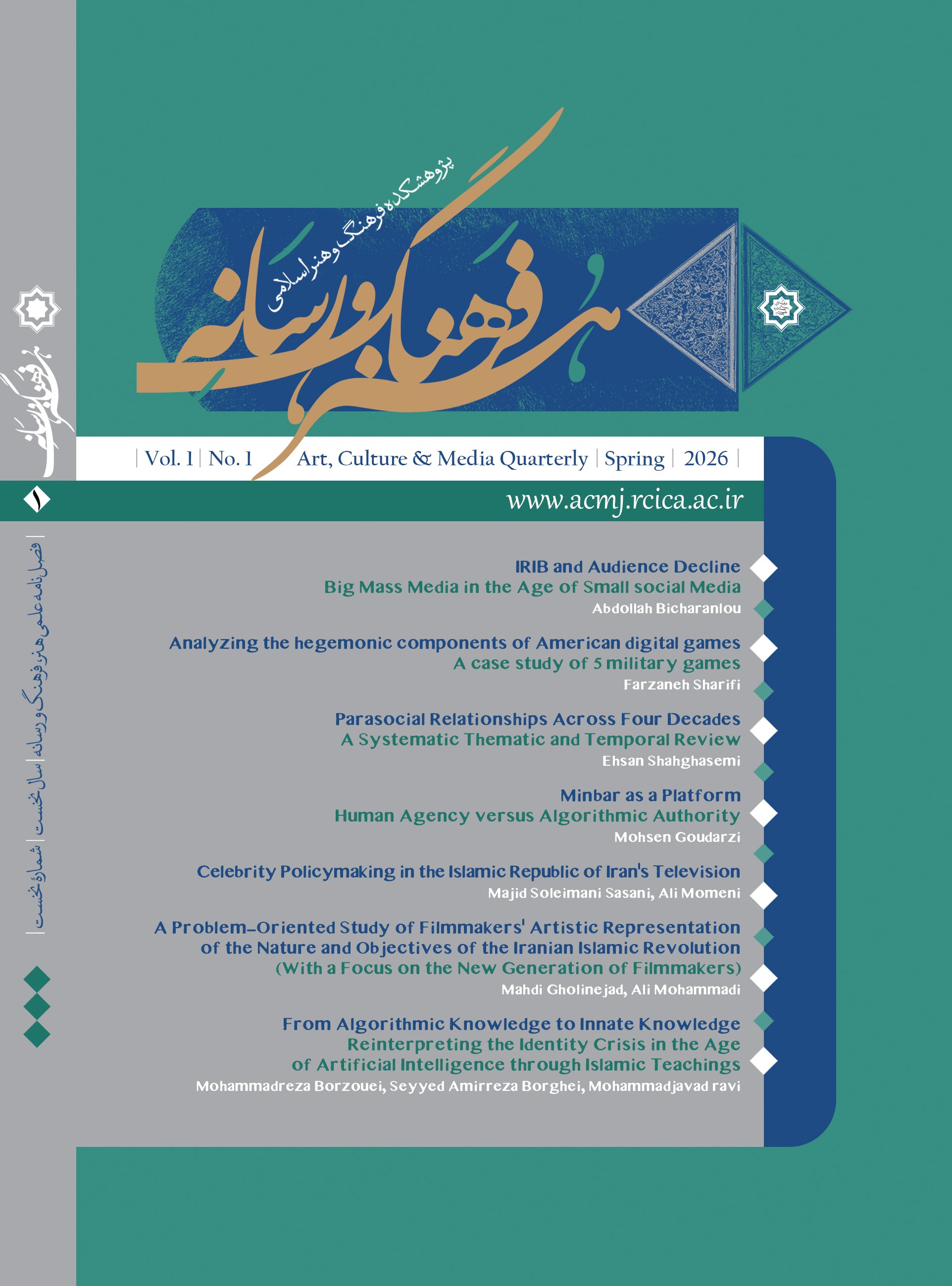

 Art, Culture and Media